• Careers
  • ZOLL Patient Management Network Login
  • About Us
  • For Medical Professionals
  • LifeVest
  • Early SCD Risk in HFrEF
  • The ACC.26 Debate: New Evidence Confirms GDMT Takes Time to Reduce SCD Risk in Newly Diagnosed HFrEF

    Featuring highlights from the ACC.26 Innovation Stage debate with Dr. Gery Tomassoni and Dr. Tara Hrobowski-Blackman.

    At ACC.26, heart failure specialist Tara Hrobowski-Blackman, DO, and electrophysiologist Gery Tomassoni, MD, debated strategies for managing early sudden cardiac death (SCD) risk in newly diagnosed heart failure patients with reduced ejection fraction (HFrEF) during guideline-directed medical therapy (GDMT) initiation. 


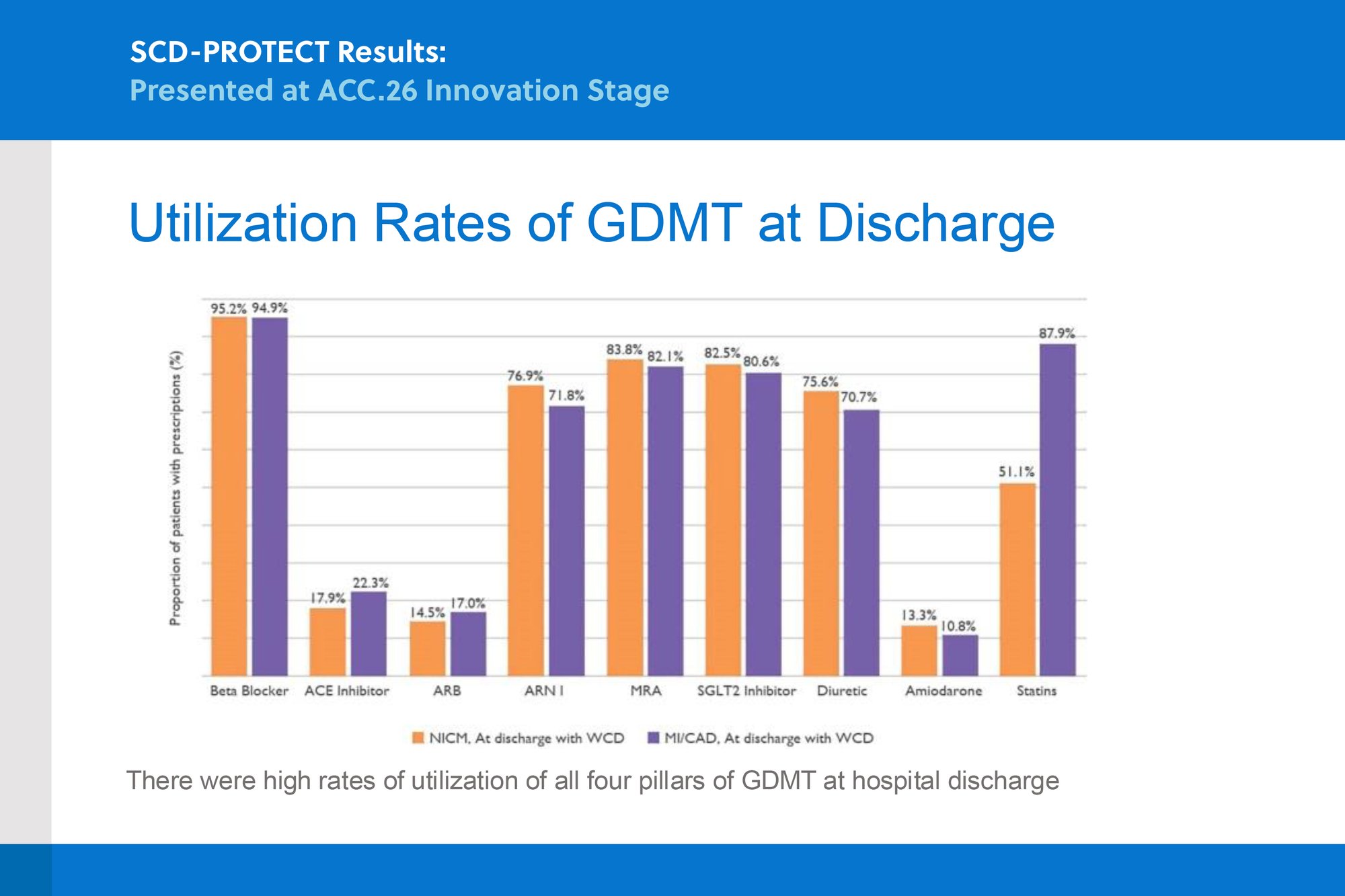
    SCD-PROTECT Utilization Rates Bar Chart ACC.26

    The Early SCD Risk Window Persists—Even with High GDMT Uptake

    SCD-PROTECT, a nationwide epidemiological, observational study of nearly 20,000 consecutive LifeVest® WCD patients, evaluated the risk of SCD during the early phase of GDMT initiation in newly diagnosed NICM and MI/CAD patients. Notably, GDMT utilization at discharge in this cohort was exceptionally high, including 95% of patients on beta-blockers, ~75% on ARNI, ~80% on MRAs, and 82% on SGLT2 inhibitors.1 This level of adherence exceeds what is typically observed in real-world practice, yet the study still demonstrated a meaningful number of life-threatening ventricular arrhythmias.
     

    "As a heart failure cardiologist, this is a mic drop."

    – Dr. Hrobowski-Blackman

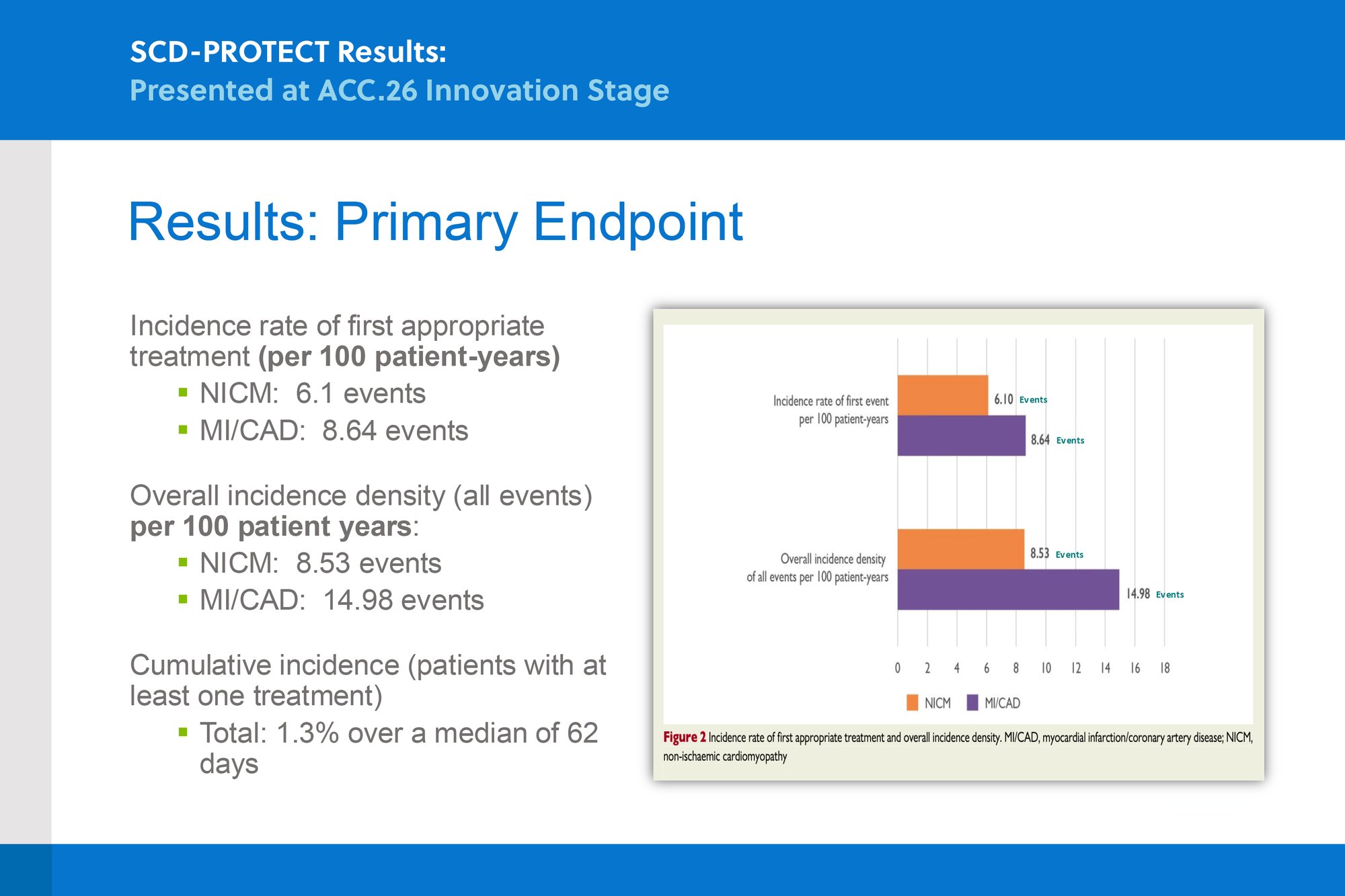
    SCD-PROTECT Primary Endpoint ACC.26

    SCD-PROTECT Clinical Findings

    In SCD-PROTECT, event rates remained clinically significant in both populations, with sudden cardiac arrest incidence reaching 6.1 per 100 patient-years in non-ischemic cardiomyopathy and 8.64 per 100 patient-years in ischemic disease.1 At the same time, patients experienced meaningful early improvement in ejection fraction—from approximately 25–29% at baseline to near 39–40% within a median of 62 days—yet 36% still required ICD implantation at the end of the observation period.1
    “Both in the ischemic and the non-ischemic populations, there was a substantial number of events.”

    – Dr. Tomassoni

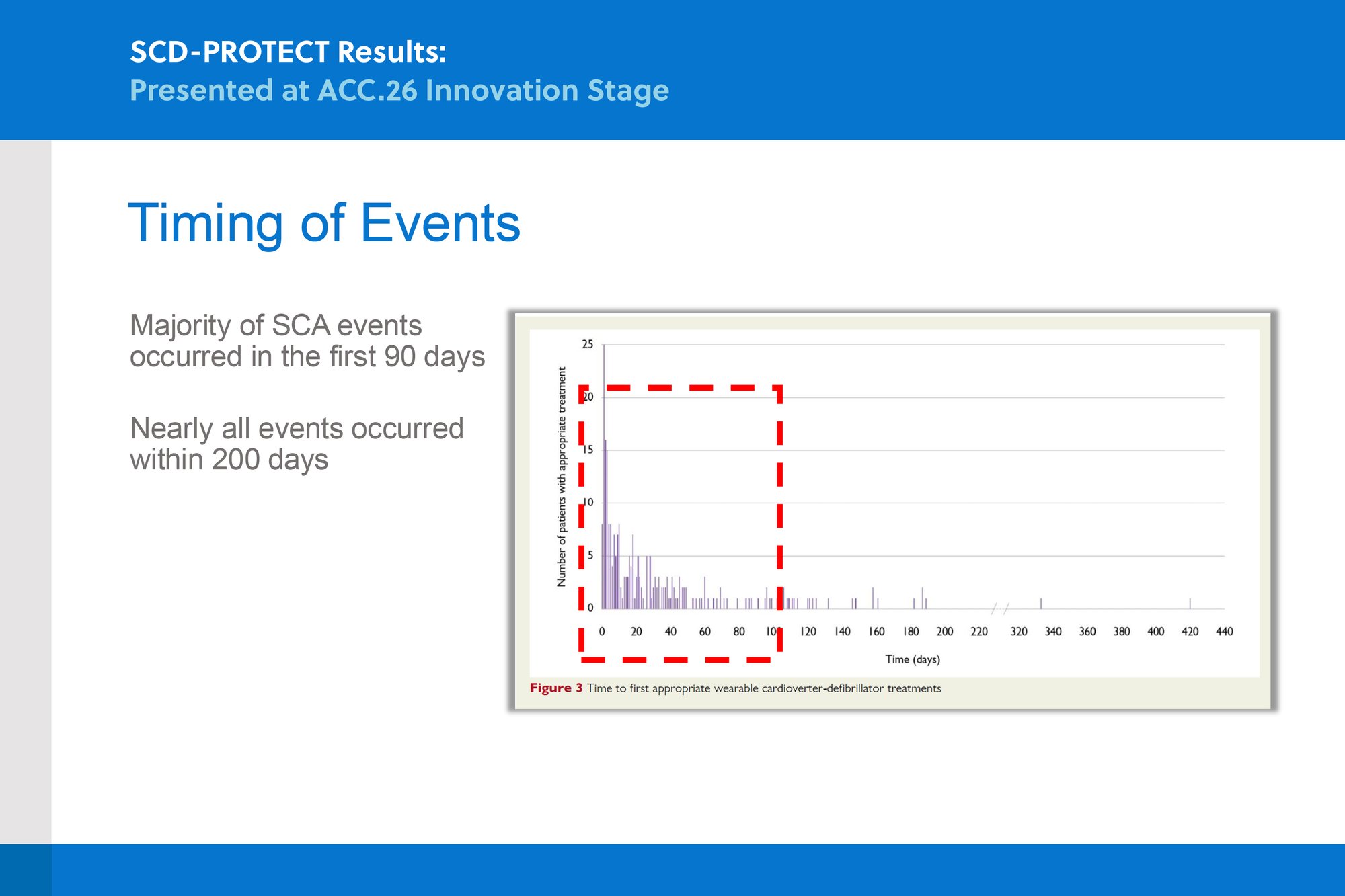
    SCD-PROTECT Timing of Events ACC.26

    Timing Matters: The First 90 Days

    Risk during this period is not evenly distributed; it is concentrated early. As emphasized by Dr. Tomassoni, “the majority of the sudden cardiac arrest events occurred in the first 90 days,” highlighting a key clinical reality: while GDMT initiation can be rapid, SCD risk reduction is not. Even with early therapy initiation and high adherence across all four pillars, patients remain vulnerable during this early treatment window.

    EF Recovery Does Not Equal Immediate Protection

    Although improvements in left ventricular ejection fraction are associated with better long-term outcomes, they do not eliminate short-term arrhythmic risk. More than half of patients in SCD-PROTECT experienced EF recovery beyond 35%, yet a substantial proportion still required ICD implantation.1 As Dr. Tomassoni noted, “arrhythmic risk persists despite LV recovery both for sudden cardiac death and ventricular arrhythmias”, reinforcing that EF alone is not a sufficient marker for near-term protection.

    The discussion ultimately converged on a practical clinical question: how should clinicians manage risk during this vulnerable period between treatment initiation and stabilization? Dr. Hrobowski-Blackman emphasized that, despite widespread use of GDMT, patients with newly diagnosed HFrEF continue to face substantial early-phase SCD risk. This time-dependent gap suggests the need for a strategy that provides protection during GDMT optimization while allowing for reassessment of long-term risk and ICD candidacy.


    Role of the ZOLL LifeVest Wearable Cardioverter Defibrillator

    Real-world evidence supports the use of ZOLL LifeVest during this vulnerable, early phase. Key LifeVest data from SCD-PROTECT highlight:

      • 0 deaths from VT/VF while protected1
      • 0.5% inappropriate shock rate1
      • 23.4+ hours/day median wear time1

    Together, these findings suggest effective, well-tolerated protection during a defined risk window.


    “It’s not going to work unless the patient wears the device… Very impressive compliance rates.”

    – Dr. Tomassoni


    Clinical Implications for Practice

    Several clear themes emerged from the discussion:

      • Early SCD risk remains significant even with high GDMT adherence
      • The first 90 days represent the highest SCD risk period
      • EF improvement does not fully mitigate arrhythmic risk in the short term
      • A temporal gap exists between therapy initiation and risk reduction
      • Strategies that address this early vulnerability may complement GDMT 

    Contemporary GDMT has transformed the long-term trajectory of HFrEF, improving survival through neurohormonal modulation and reverse remodeling. However, SCD risk remains high during the early period. During the early treatment phase, patients remain exposed to a heightened risk of ventricular arrhythmias and sudden cardiac death—even when GDMT utilization rates are very high. Recognizing and addressing this early vulnerability is essential to delivering a more complete, time-aligned approach to HFrEF management.


    References

    1. David Duncker, Eloi Marijon, Marco Metra, Olivier Piot, Marat Fudim, Uwe Siebert, Norbert Frey, Lars Siegfried Maier, Johann Bauersachs, Sudden cardiac death in newly diagnosed non-ischaemic or ischaemic cardiomyopathy assessed with a wearable cardioverter-defibrillator: the German nationwide SCD-PROTECT study, European Heart Journal, 2025;, ehaf668, https://doi.org/10.1093/eurheartj/ehaf668

    20c1504_a01_reva

    © 2026  ZOLL Medical Corporation. All rights reserved. ZOLL and LifeVest are trademarks or registered trademarks of ZOLL Medical Corporation and/or its subsidiaries in the United States and/or other countries.