
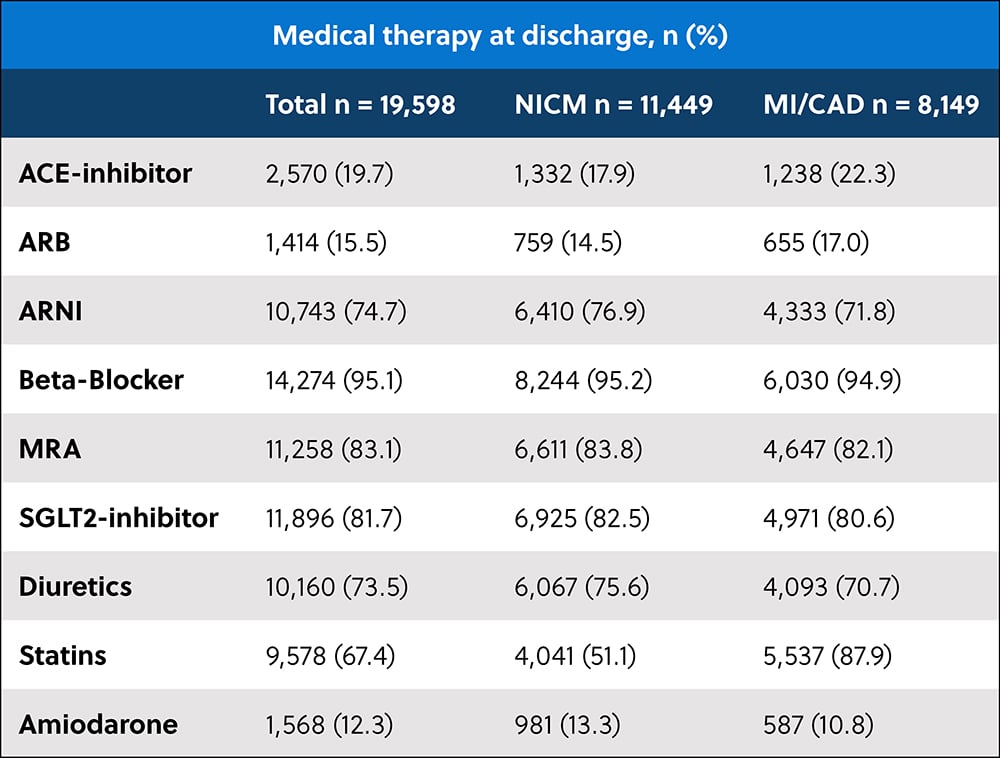
SCD-PROTECT, a nationwide epidemiological, observational study of nearly 20,000 consecutive LifeVest WCD patients, evaluated the risk of SCD during the early phase of GDMT initiation in newly diagnosed NICM and MI/CAD patients. Four-pillar GDMT use was widespread in both populations (figure 1).1
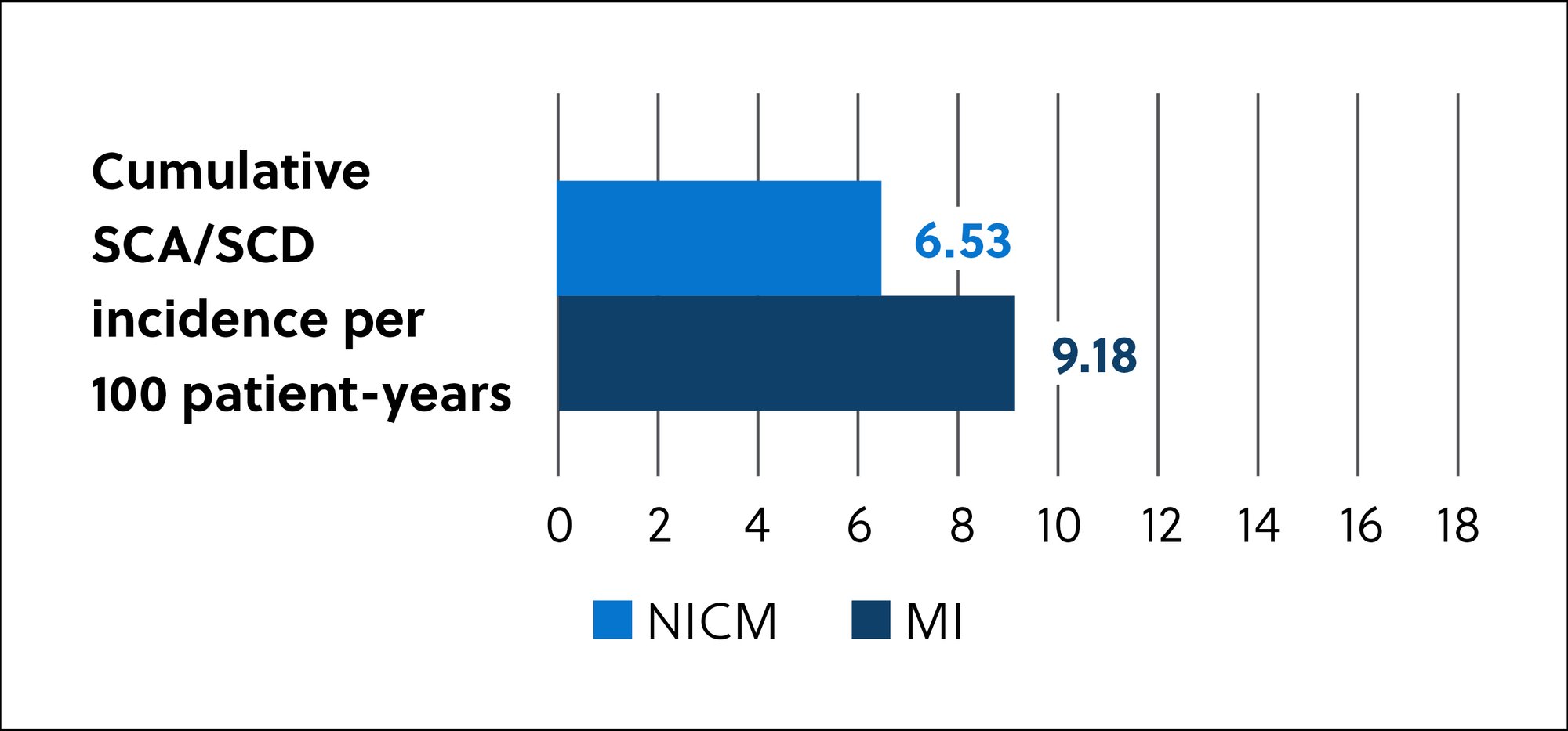
Despite the use of GDMT, the cumulative incidence of SCA/SCD was high, at 6.10 events per 100 patient-years (NICM) and 8.64 events per 100 patients-years (MI/CAD) (figure 2).1 Results were reported in 100 patient-years to allow comparison to trials covering chronic patient populations. Study authors concluded the incidence of SCA/SCD per 100 patient-years was considerably higher than seen in ICD trials in chronic HFrEF patients.1 These results were validated with an additional study of 20,000 patients presented at AHA 2025, which confirmed this high rate of SCD in a WCD patient population.2
ZOLL has introduced numerous innovations and education initiatives into the WCD category to enhance the patient experience and optimize wear times.
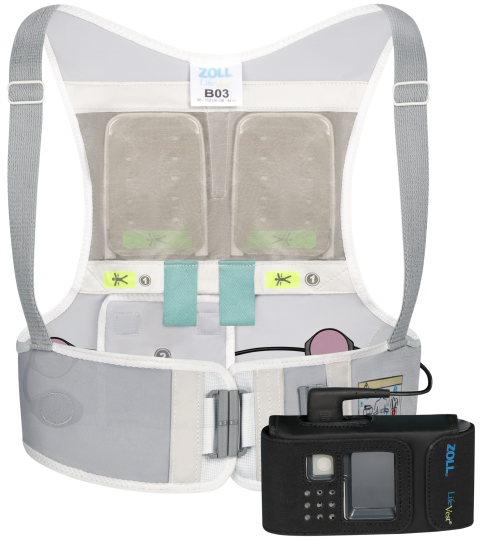
Three generations of garment innovations over the past five years have delivered the most comfortable LifeVest to date, preferred by patients for greater comfort and ease of use.3 The modern LifeVest includes lightweight, athleisure fabrics and the largest range of garment sizes, fitting chest measurements of 26”-56” (figure 3).
An AI-enhanced algorithm introduced in 2018 has led to zero median false alarms at 90 days, validated in a study of 96,000 real-world patients.4
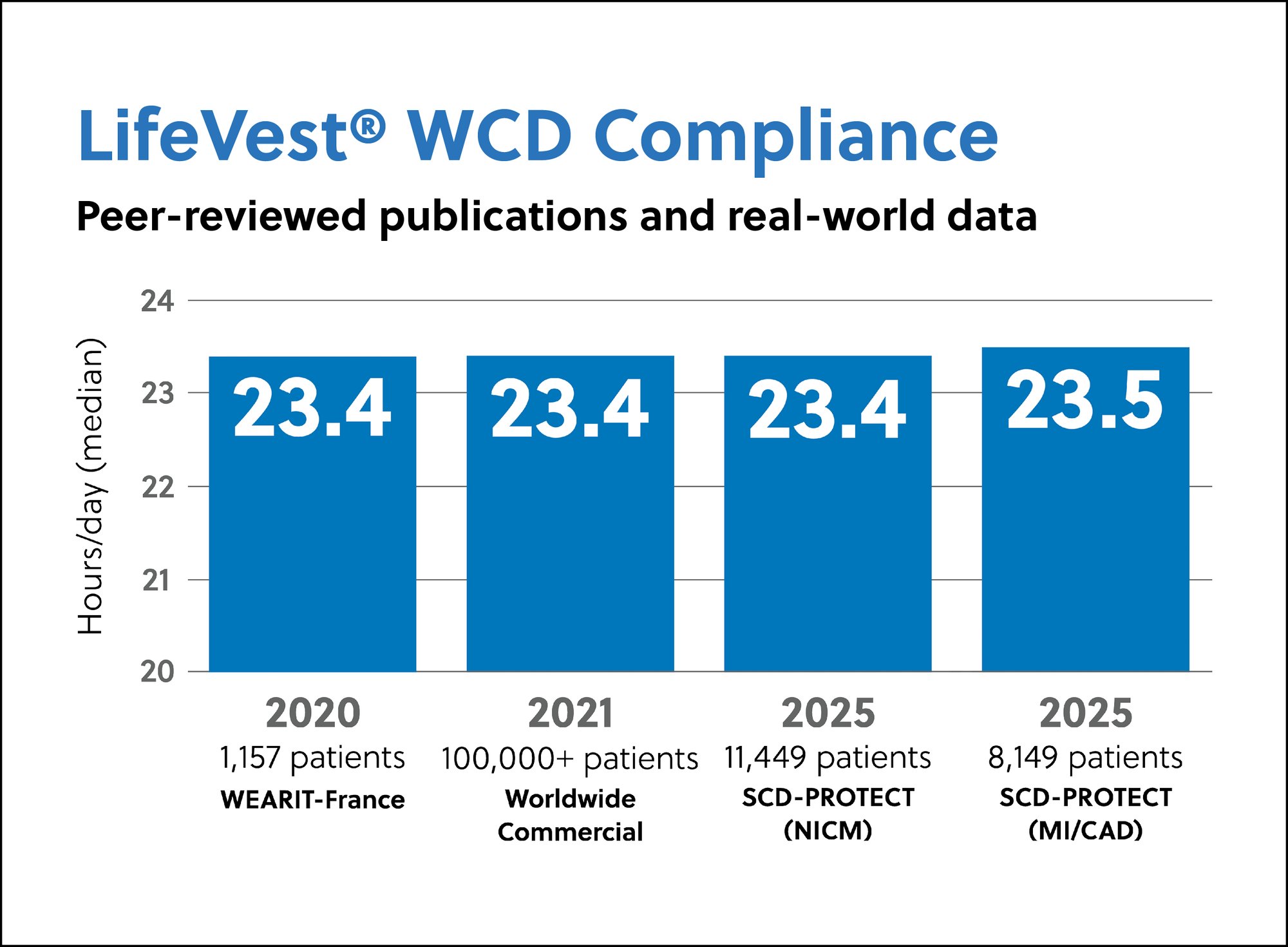
Clinical results demonstrate a meaningful impact in patient outcomes. During this decade, LifeVest has delivered #1 patient compliance in real-world and peer-reviewed data, validated most recently with SCD-PROTECT (figure 4).1,5,6
Learn more about innovations behind the modern LifeVest.